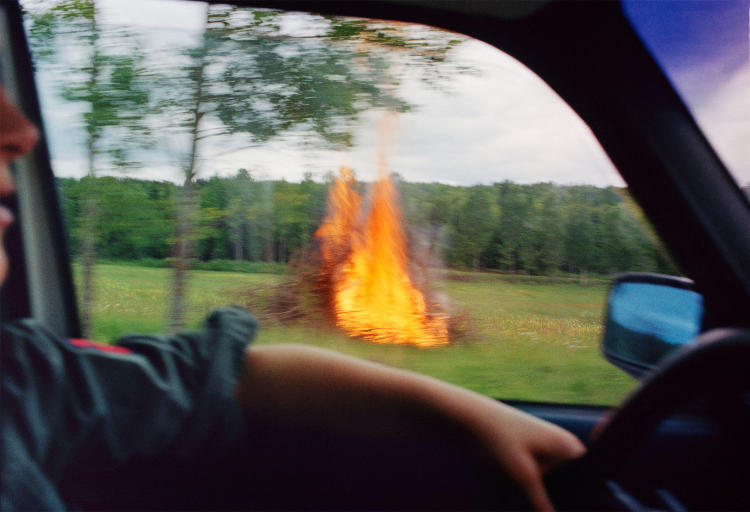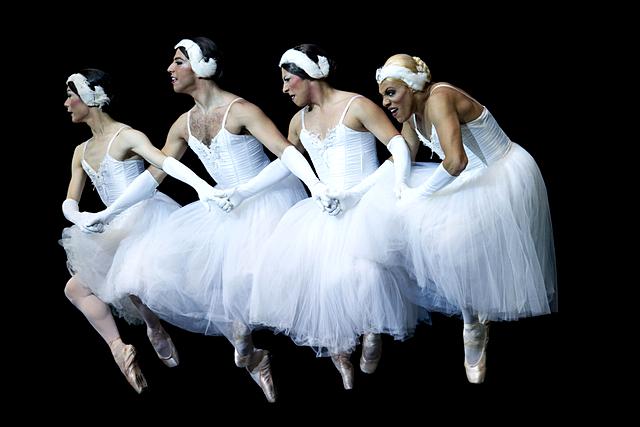
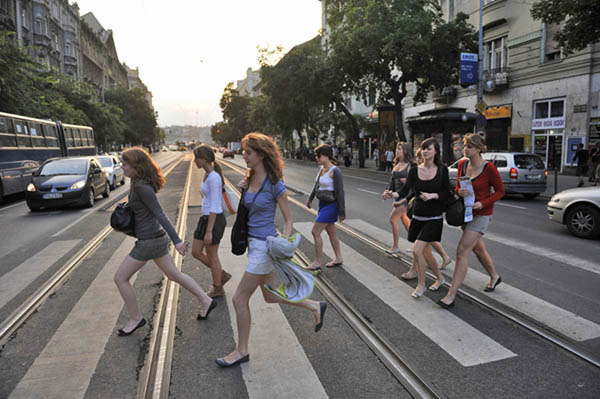

Miklós Teknős was born in Budapest in 1957. After completing his studies in photography, he began his career as a museum photographer at the Hungarian National Gallery. Since 1979, he has been a pillar of Hungarian photojournalism, working for major publications such as Magyar Mezőgazdaság, Népszava, and, from 1990, the leading daily Népszabadság.
His professional excellence has been recognized with numerous prestigious awards, including several prizes at the Hungarian Press Photo Exhibitions, the Munkácsi Márton Prize (1998), and the Pulitzer Memorial Prize (2006).
“The Eye-Man” – Reflections by Iván Bächer
“For years, he has been my eyes: Miklós Teknős.”
For more than half a decade, the weekly columns of renowned Hungarian writer Iván Bächer in Népszabadság were illustrated by Teknős’s photographs. As Bächer wrote:
“I can work with Miki Teknős with my eyes closed; he looks for me. More importantly, he actually sees. And that is the great thing. Taking good pictures—even great ones—is a basic requirement at a paper like Népszabadság. But to see with my eyes? I don’t know which school teaches that.
When we work together in a church, a pub, a mill, or a prison, I inevitably watch him work. He does so, above all, with humility and curiosity. A proud humility and a never-intrusive curiosity. Humility toward the craft and toward the human being standing before his lens.
Miklós has been bringing in the material every single day for decades, fulfilling the quota, grinding through the industry. He is a daily laborer for a daily newspaper, recording the ‘today’ of every moment. And yet, he does not live or see only for today. He is a long-distance photographer. He is the greatest photographer of Újlipótváros (a historic district of Budapest), because his images radiate the soul of that neighborhood most beautifully and most faithfully.”
About the District: The Bottomless Well
In his book Megyek Budára (Going to Buda), Bächer describes the setting of Teknős’s most iconic works:
“Újlipótváros is like a bottomless well from which stories can be drawn until the end of time. Thirty thousand people, thousands of houses, shops, and institutions—both visible and invisible landmarks. In each large apartment complex lives a village-sized population, every single one of whose lives is a complete novel. I don’t aim for completeness; I only report on what pops up before me, what I stumble over, or what is shoved under my nose by my friends.”
Miklós Tenős Photo exhibition
October 19, 2010 – November 13.
CULTiRiS Galéria / Örkény István Bookstore
1137 Budapest, Szent István körút 26.
weekdays 10-19, saturday 10-14.