
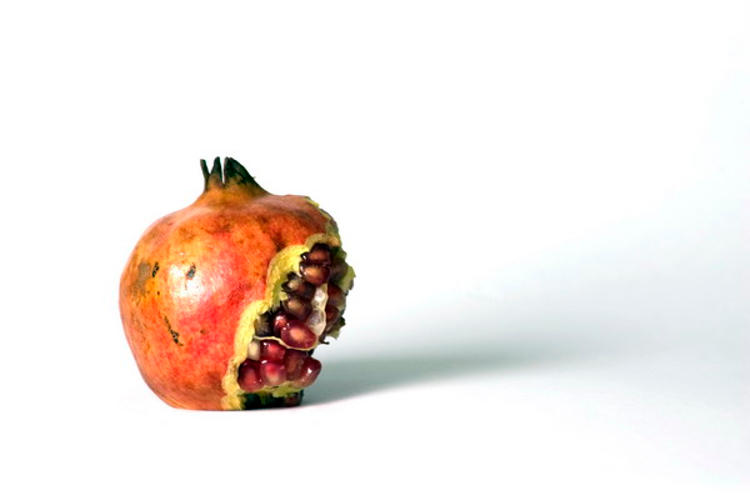

Still life has always been a beloved subject in the world of painting. Over the centuries, thousands of works have explored and resolved the challenge of representing arrangements of various objects on a two-dimensional plane. This tradition was later adopted by photographers, maintaining the essence of “natura morte”—the captivatingly idyllic world of beauty for its own sake.
However, with the rise of color magazines and modern advertising, this perspective shifted, becoming functionally subservient to profit. Today, things are rarely what they seem; we are surrounded by artificially enhanced, cleverly manipulated product photography designed solely to make merchandise desirable.
It is within this context—or perhaps in contrast to it—that Gábor Steiner creates his still lifes, or more accurately, his object photography.
The Interplay of Light and Tone
In every one of Steiner’s photographs, light plays the leading role. The logic is simple: without light, there is only darkness. Between these two extremes lie the subtle gradations of light and dark that create tones—a key element in our perception of space and form.
Shadow is the natural offspring of light; it is the dark area created when an object stands between the light source and a surface. These shadows serve as our guides, informing us about the position, quality, and intensity of the light source.
Color, Mood, and Atmosphere
Light also dictates our perception of color. The “true” color of an object is constantly modified by tints, shadows, and reflected light. It is rare to have only a single light source; therefore, an object typically picks up minute spots of color from multiple angles.
Often, in Steiner’s work, light itself becomes the true subject of the image. It acts as the cohesive force that holds the pictorial elements together, expresses the mood, and subtly hints at the world existing beyond the internal space of the frame.
By László Szlaukó, Fine Artist


