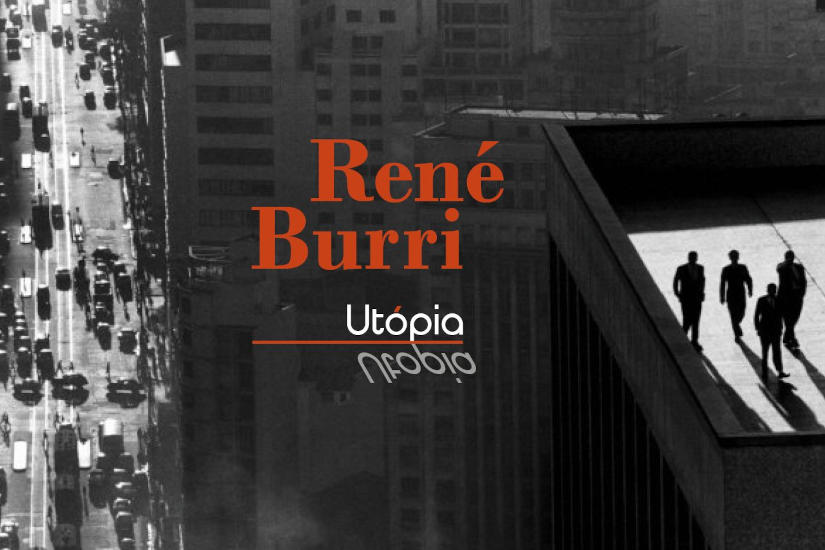
René Burri: Utopia — A Magnum Photographer’s Architectural Vision
René Burri Utopia exhibition at Budapest Photo Festival 2026 presents iconic modern architecture photography, highlighting the Magnum photographer’s unique documentary vision.

A landmark photography exhibition at Budapest Photo Festival 2026
The 10th anniversary edition of the Budapest Photo Festival 2026 opens with a major exhibition dedicated to René Burri, a prominent member of Magnum Photos. Hosted at the Műcsarnok, the exhibition titled Utopia presents a curated selection of nearly one hundred photographs, focusing on Burri’s distinctive interpretation of modern architecture and its broader cultural context.
The exhibition continues the festival’s long-standing tradition of collaborating with international institutions and presenting globally recognized photographers. As part of its anniversary program, the festival expands its international scope with exhibitions, professional talks, portfolio reviews, and workshops, reinforcing its position within the European photography scene.
René Burri’s photographic legacy and Magnum career
Early career and Magnum Photos affiliation
René Burri was born in Zurich in 1933 and studied at the Zurich School of Applied Arts under influential instructors such as Hans Finsler and Alfred Willimann. His early professional experience included working as a cinematographer for Walt Disney Film in 1954.
In 1955, Burri produced a significant photo essay documenting educational methods for deaf-mute children. This project served as his entry portfolio to Magnum Photos, marking the beginning of a long-term collaboration. By 1959, he became a full member of the agency, joining a network of photographers known for combining journalistic rigor with visual storytelling.
International assignments and global reportage
Between 1956 and 1958, Burri undertook numerous assignments across Europe and the Middle East, including Czechoslovakia, Turkey, Egypt, Syria, Iraq, and Lebanon. He also spent extended periods in Latin America, documenting rural life, including Argentine gauchos.
His photographic work appeared in major international publications such as Life magazine, Look magazine, Stern, Paris Match, The Sunday Times, and The New York Times. These platforms positioned Burri within the mainstream visual media landscape of the mid-20th century.
Iconic figures and historical events
Burri is widely recognized for his portrait of Che Guevara, often depicted smoking a cigar. His assignments brought him into direct contact with key political figures such as Fidel Castro during his work in Cuba in 1963.
Throughout his six-decade career, Burri documented pivotal historical moments, including the fall of the Berlin Wall, the Tiananmen Square protests in Beijing, and the aftermath of conflicts in Beirut. His work reflects a consistent engagement with geopolitical transformation and social change.
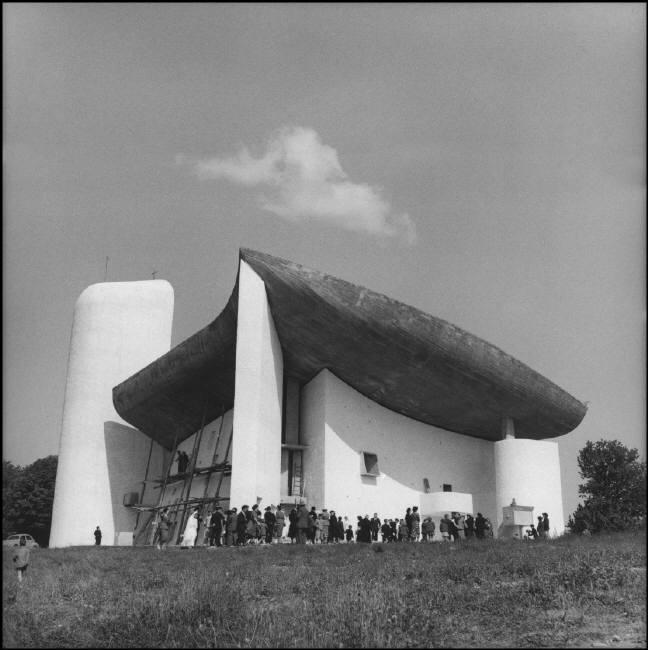
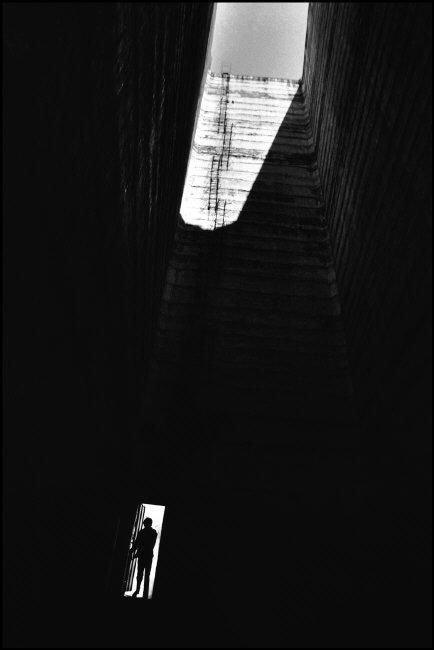
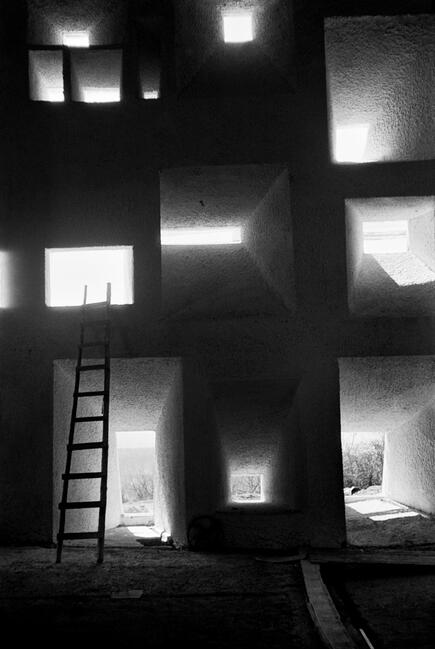
Inauguration of the chapel of Notre-Dame du Haut, built by LE CORBUSIER.
Utopia exhibition: architecture as visual narrative
A shift from reportage to architectural interpretation
The Utopia exhibition introduces a different perspective on Burri’s oeuvre. While he is primarily associated with photojournalism, this selection emphasizes his engagement with modernist architecture as a visual and conceptual subject.
The exhibition frames architecture not merely as a backdrop but as an active element in shaping human experience. Through Burri’s lens, buildings become symbolic structures reflecting ideological ambitions and societal transformations of the 20th century.
Modernist icons through Burri’s lens
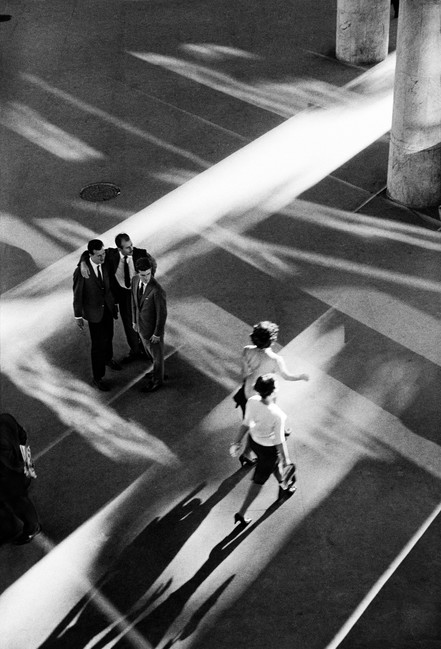
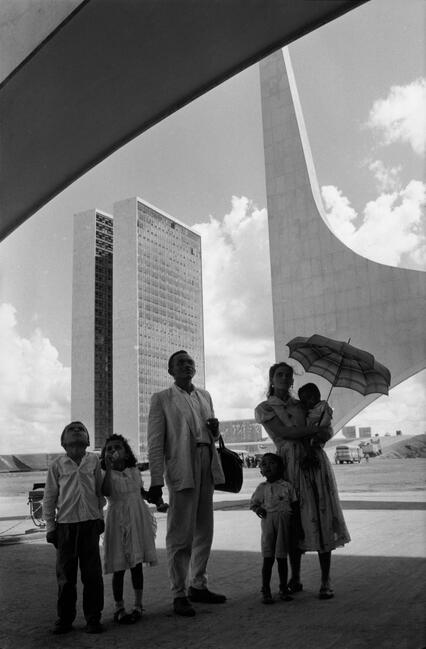
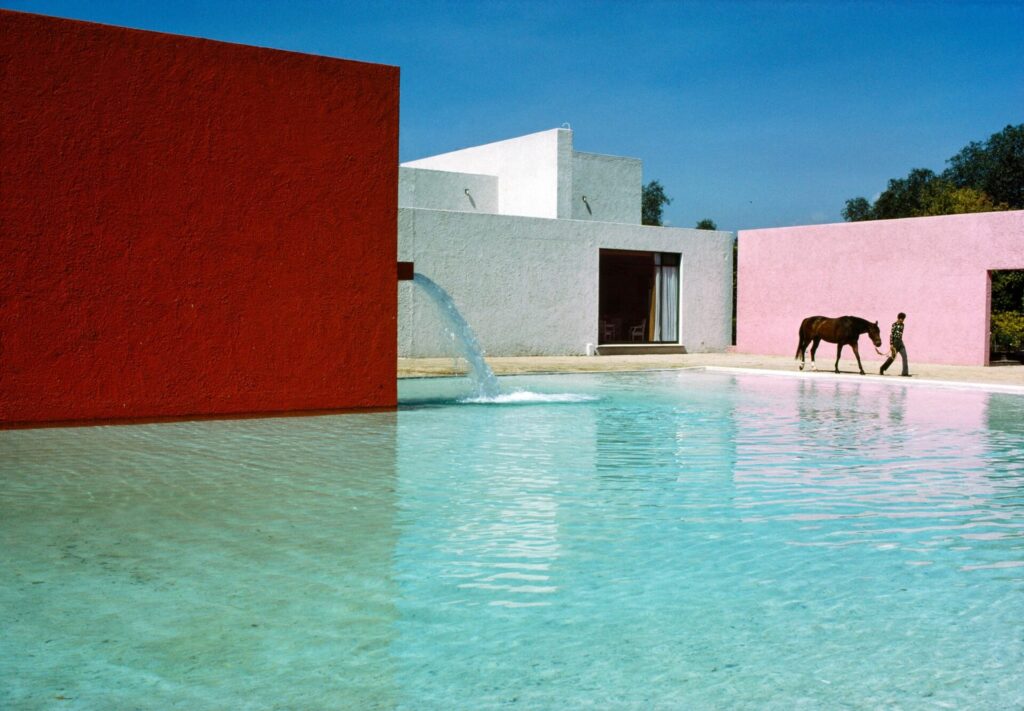
Among the architectural subjects featured are works by Le Corbusier, including the Ronchamp Chapel, and projects by Oscar Niemeyer in Rio de Janeiro and Brasília. These structures are presented through Burri’s characteristic compositional approach, combining geometric precision with human presence.
Burri’s photographs highlight contrasts between scale, form, and function, often incorporating human figures to contextualize monumental architecture. This method underscores the interaction between individuals and constructed environments.
Artist portraits and architectural protagonists
In addition to architectural imagery, the exhibition includes artist portraits published in outlets such as Paris Match. These works bring attention to the creators behind modernist architecture, positioning them as central figures within the visual narrative.
By integrating portraits and architectural studies, the exhibition constructs a layered interpretation of modernism, linking artistic intention with material realization.
Documentary expression and visual metaphors
Expressive documentary photography
According to photography historian Hans-Michael Koetzle, Burri’s work transcends conventional press photography. His images function as visual metaphors, offering insights into broader societal conditions.
The Utopia exhibition illustrates this approach through sequences that juxtapose creation and destruction, development and decay. These visual contrasts contribute to a narrative that reflects the complexities of the 20th century.
Human presence in architectural space
A recurring element in Burri’s work is the inclusion of human figures within architectural settings. This compositional strategy introduces scale and perspective while emphasizing the relationship between individuals and their environments.
The photographs often depict transitional moments, where architecture serves as a stage for social interaction or historical change. This reinforces the documentary dimension of Burri’s practice.
Exhibition context and curatorial background
Origins of the Utopia concept
The original Utopia exhibition was conceived in 2004 by René Burri in collaboration with Hans-Michael Koetzle. The current presentation builds upon this concept, adapting it to the context of Budapest Photo Festival 2026.
The exhibition is organized through a partnership between Magnum Photos, Műcsarnok, and the festival, ensuring access to archival material and maintaining curatorial continuity.
Exhibition details and visitor information
The exhibition runs from March 28 to June 28, 2026, at Műcsarnok in Budapest. The venue, located on Dózsa György út, serves as a central exhibition space for contemporary art and photography in Hungary.
Visitors can expect a comprehensive overview of Burri’s architectural photography, presented in a structured exhibition layout that facilitates thematic exploration.
René Burri’s relevance in contemporary photography discourse
Legacy within photojournalism and visual culture
René Burri’s work occupies a distinct position at the intersection of photojournalism and artistic photography. His ability to integrate narrative content with formal composition has influenced subsequent generations of photographers.
The Utopia exhibition contributes to ongoing discussions about the role of photography in documenting and interpreting built environments. It also highlights the relevance of mid-20th century modernism in contemporary visual culture.
A centennial perspective on transformation
Through its focus on architecture, the exhibition offers an alternative reading of historical transformation. Rather than emphasizing events alone, it examines the physical structures that both shape and reflect societal change.
This approach aligns with current curatorial practices that seek to contextualize photography within broader cultural and historical frameworks.
Photos: Art Hall, Budapest and © Rene Burri/Magnum Photos
René Burri Utopia exhibition at Budapest Photo Festival 2026
28th of March, 2026. – 28th of Juin, 2026.
Art Hall, an institution of the Hungarian Academy of Arts
Budapest, 37. Dózsa György street
More information at the Art Hall official website.